To prepare for the TCF Canada, start with a full mock test to find your NCLC level in each test, then spend most of your time on your weakest test, because for Express Entry the lowest test decides. Practise Listening and Reading by CEFR level, Writing and Speaking task by task, and finish with timed full mocks. The plans below show how to fit that into 8 or 12 weeks.
- NCLC 7 means B2 in every test.
- Take a full mock first: you can't plan without knowing your weakest test.
- Spend most of your time on the lowest test, not the one you enjoy.
- Practise Listening and Reading at the first level where you get fewer than half right.
- End with timed mocks so the clock holds no surprises on test day.
Step 1: Know your target
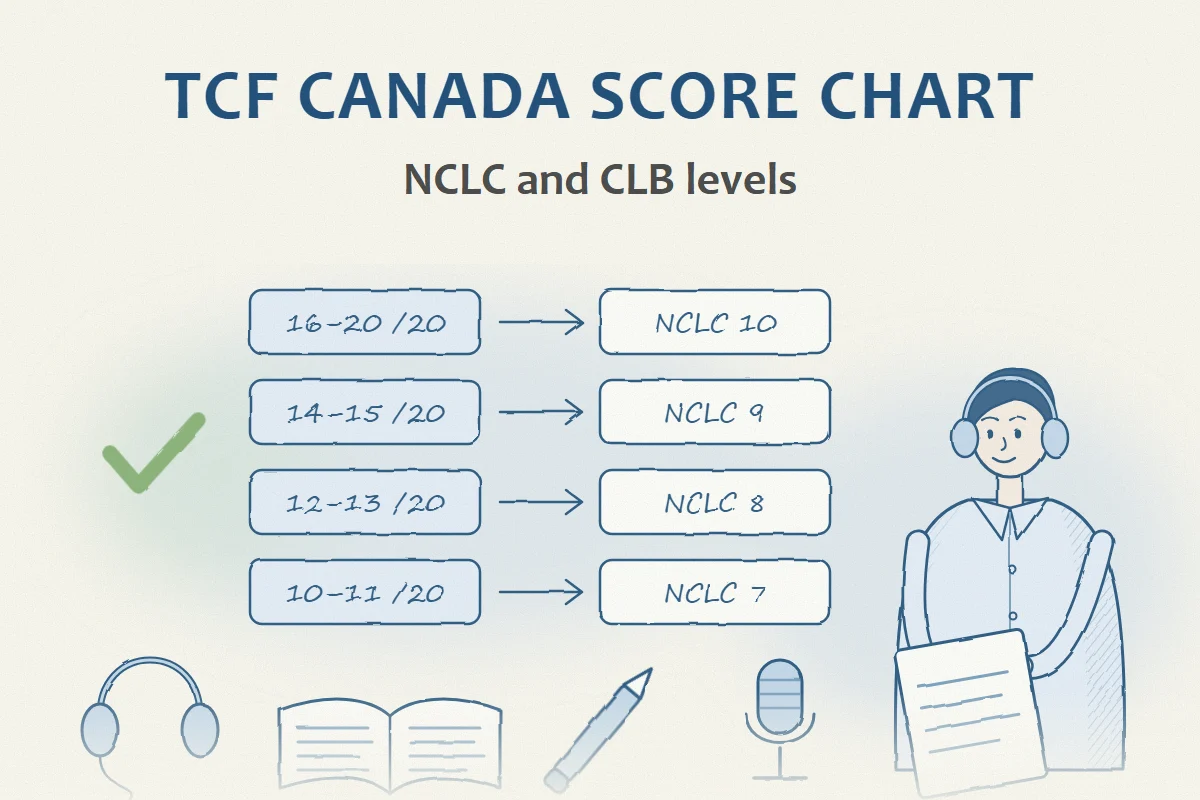
Check the NCLC your program needs on IRCC's website. For the Federal Skilled Worker program, the extra CRS points for French and the French-language draws, it is NCLC 7 in all four tests. For citizenship (ages 18 to 54) it is NCLC 4 in speaking and listening.
| Target | Listening | Reading | Writing | Speaking |
|---|---|---|---|---|
| NCLC 7 | 458 | 453 | 10/20 | 10/20 |
| NCLC 4 | 331 | 342 | 4/20 | 4/20 |
Every level is in the TCF Canada score chart.
Step 2: Take a full mock test
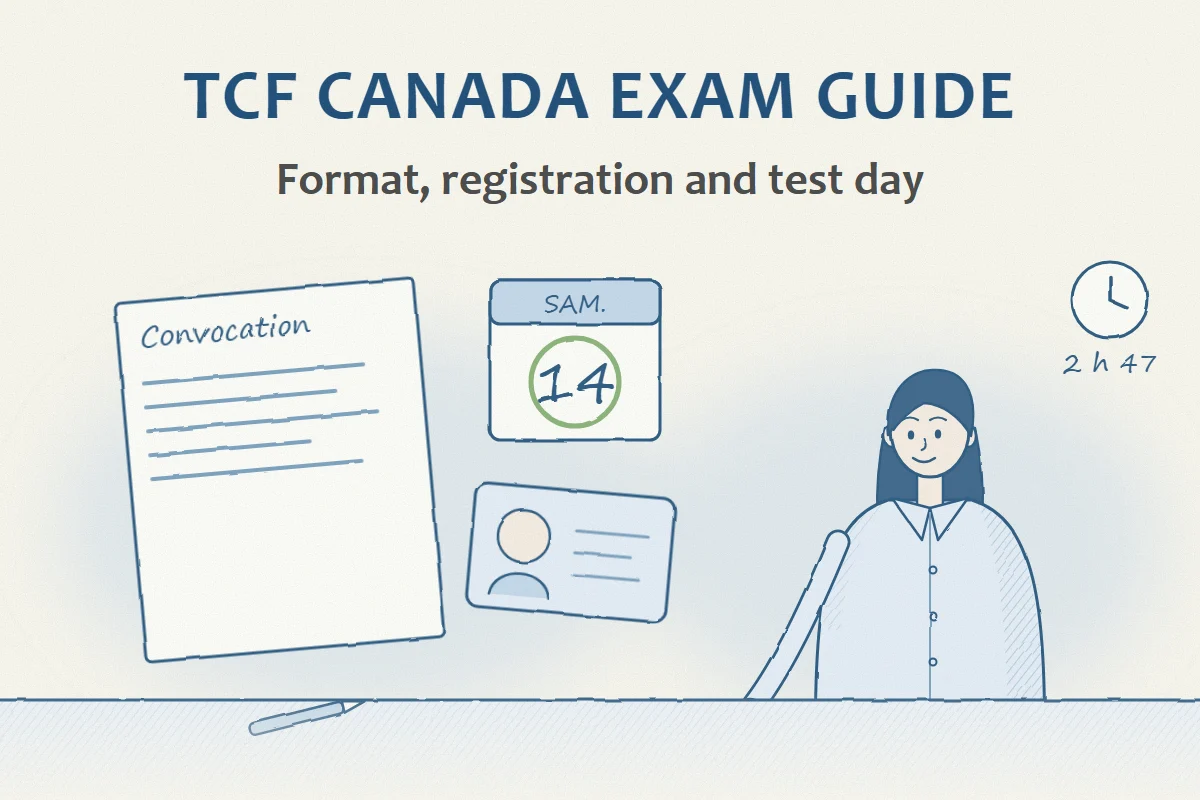
Sit all four tests under exam timing: Listening 35 minutes with each recording played once, Reading 60 minutes, Writing 60 minutes and Speaking 12 minutes. The result gives you an estimated NCLC in each test and, more importantly, shows which one is lowest. Practice scores are estimates, because FEI doesn't publish its scoring formula, but the gap between your tests is what matters for planning.
Step 3: Work on your weakest test first
For Express Entry, NCLC 8 in three tests and NCLC 6 in one doesn't count as NCLC 7. Give your weakest test about half of your practice time until it catches up, and keep the others ticking over with a short session each week.
How to practise each test
- Listening: each recording plays once, so read the question and options before it starts. Questions get harder as the test goes on, so don't lose time early. Practise at the first CEFR level where you get fewer than half the questions right, then move up.
- Reading: 60 minutes for 39 questions is about a minute and a half each. Answer every question: a blank earns nothing, and a wrong answer costs nothing more.
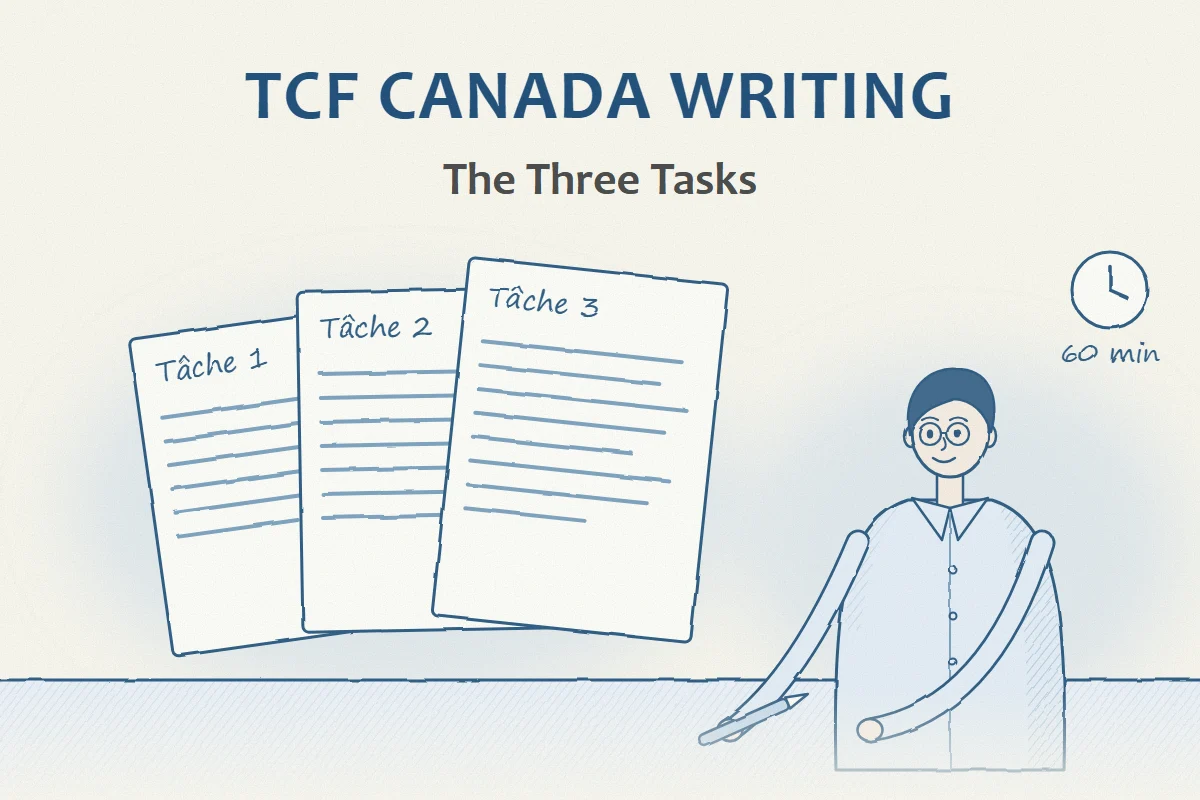
- Writing: practise each task on its own and count your words (anything between two spaces is a word). Stay inside 60–120, 120–150 and 120–180 words. In Task 3, summarise both documents before giving your own opinion. The Writing and Speaking templates show what to put in each part.
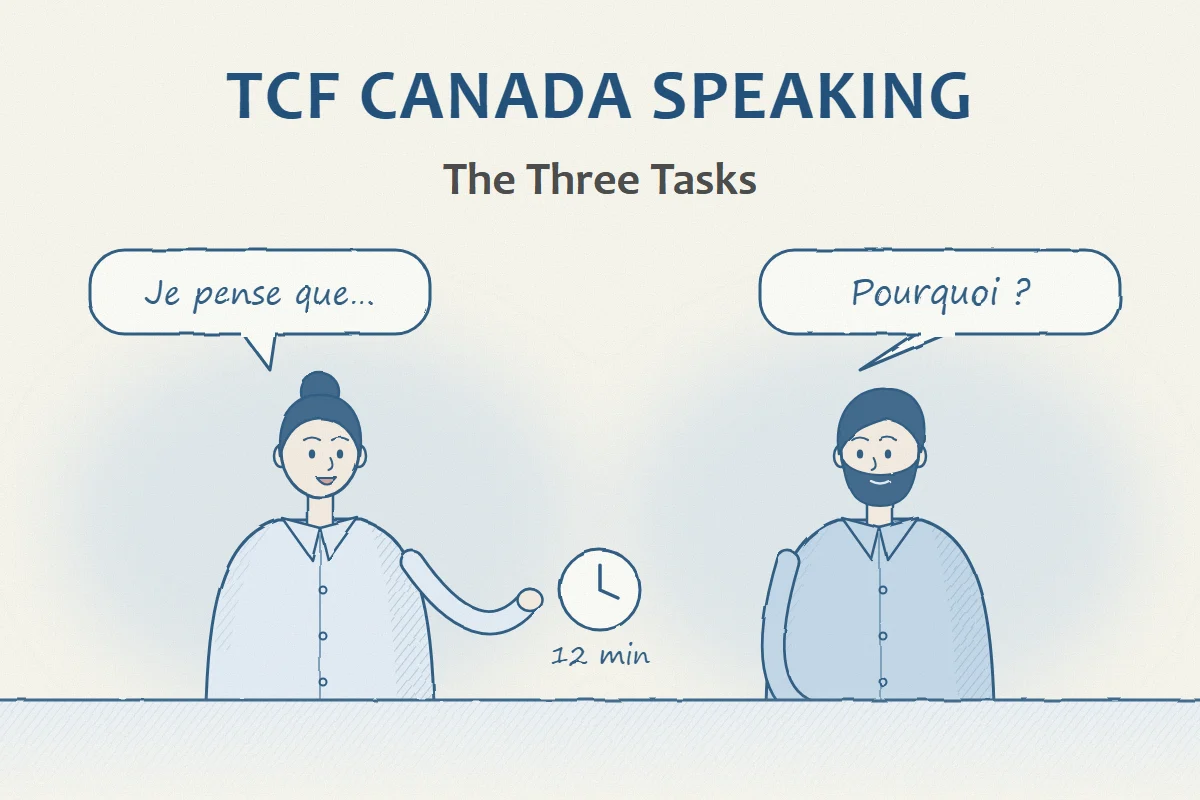
- Speaking: in Task 2 you ask the questions, so use the 2 minutes to prepare a list. In Task 3, give a clear opinion with reasons and examples. Don't recite a memorised answer: examiners can rate it A1 non atteint.
An 8-week TCF Canada study plan
For candidates whose mock is already close to the target in every test.
| Week | Focus |
|---|---|
| 1 | Full mock under timing. List your weakest and second-weakest tests. |
| 2–3 | Weakest test most days. Listening and Reading by level, or one Writing or Speaking task a day with feedback. |
| 4 | Second-weakest test. Keep one short session a week on the weakest. |
| 5 | Second full mock. Compare each test with week 1. |
| 6 | Back to whichever test is still lowest. Writing and Speaking tasks under exact timing. |
| 7 | Third full mock, then fix the mistakes it shows. |
| 8 | Light practice and one last timed run of your weakest test. Rest the day before. |
A 12-week plan if you are further from your target
For candidates with a test a whole CEFR level below the target, B1 aiming for NCLC 7 for example.
| Weeks | Focus |
|---|---|
| 1 | Full mock to find your starting level in each test. |
| 2–5 | Build the language: daily listening in French, reading at your level, and the grammar and vocabulary your Writing and Speaking feedback points to. |
| 6–9 | Exam format: question bank sets by level, and each Writing and Speaking task with feedback. A full mock at the end of week 7. |
| 10–12 | A full mock every week, then fix what each one shows. Rest the day before the test. |
The Exam Hero AI coach builds this kind of weekly plan for you from your exam date, target NCLC and current level, and updates it as your scores change.
Free resources
- France Éducation international: the official TCF Canada presentation and sample tests, on FEI's TCF Canada page.
- TV5Monde: free TCF practice activities on Apprendre TV5Monde.
- RFI Français facile: news and podcasts in easy French, good daily listening on francaisfacile.rfi.fr.
- Exam Hero: a free full TCF Canada mock test and free sets in every part of the question bank.
Mistakes that cost points
- Leaving Listening or Reading questions blank. A blank and a wrong answer both score 0, so always answer.
- Writing outside the word range, or skipping a task: the script can be rated A1 non atteint.
- Reciting a memorised speech in Speaking.
- Giving only your opinion in Writing Task 3, without summarising the two documents.
- Practising without a timer, then running out of time on the day.
Exam Hero is an independent preparation platform, not affiliated with FEI or IRCC, and its scores are estimates.