
Study Guides
TCF Canada Study Guides
Format, strategies and tips for each of the four TCF Canada tests, in English and French.
Start here
New · Templates
A template for every Writing and Speaking task
What to put in each part, what to leave out, a model answer in French and quick drills, for all six tasks.
See the templates
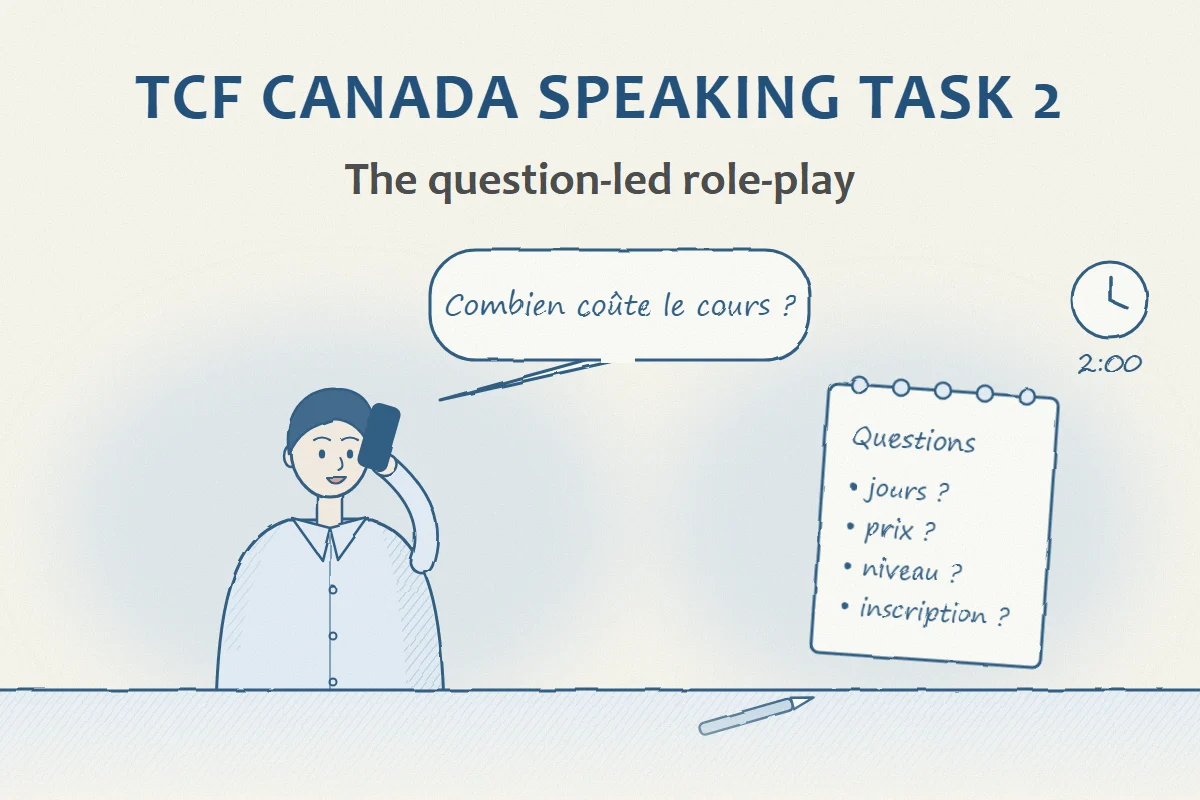
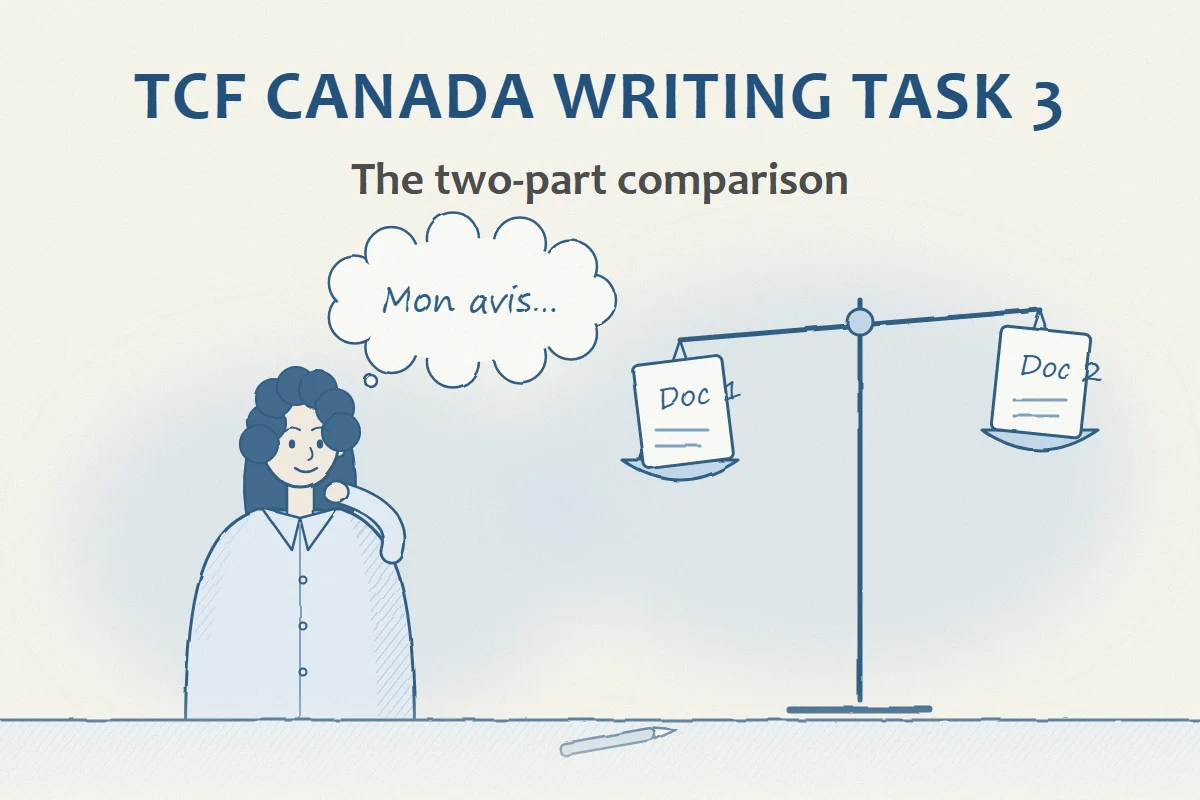
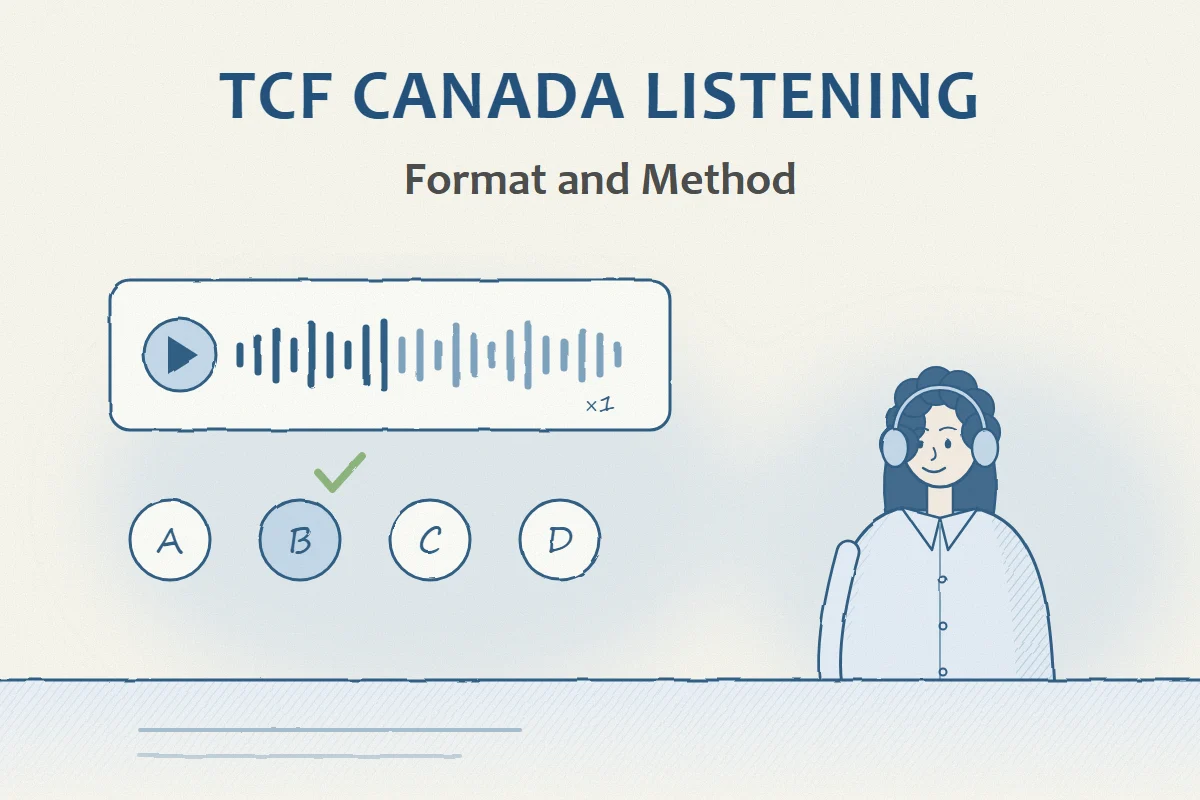
Every TCF Canada study guide
The TCF Canada has four tests (Listening, Reading, Writing and Speaking), and each is scored on its own. These guides take the exam one test at a time: how it works, how long you get, what the raters reward, and the mistakes that quietly cost marks.
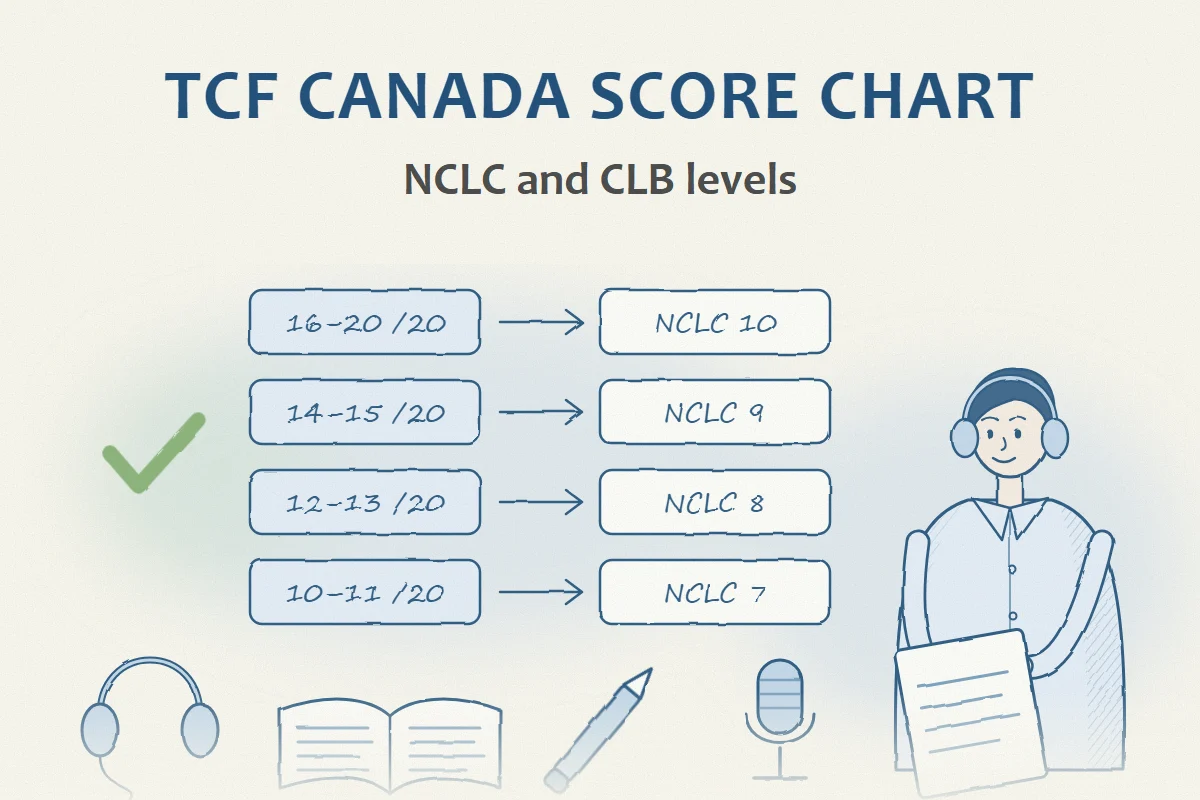
Listening and Reading are 39 questions each, from A1 up to C2. Writing and Speaking have three tasks each. Start with the exam guide and the score chart, then read the guide for whichever test your first mock showed as weakest: IRCC uses your lowest NCLC.
Are the TCF study guides free?
Yes. Every study guide is free to read and does not need an account. Each one covers a test's format, timing, assessment criteria and common mistakes, with a method and examples.
Which guide should I read first?
If you are new to the TCF Canada, start with the exam guide (format, registration and test day) and the score chart (what each score means in NCLC). Then take a mock test, follow the guide on how to prepare, and read the guides for the tests your mock shows are your weakest.
What score do I need to pass the TCF?
TCF Canada has no pass mark. Each of the four tests is reported on its own: Listening and Reading from 100 to 699, Writing and Speaking out of 20, each with a CEFR level and the NCLC level IRCC gives it. Your immigration program sets the NCLC level it needs, so check IRCC's current requirements.